By a Historian and Ethicist in China
I. The Genesis of a Witness
My journey with Christ began in early 1992. I am a child of the era of St. John Paul II, a pontificate defined by the courage to “Be Not Afraid.” My faith was not formed in the comfort of official cathedrals, but through the lived witness of the Underground community. The bishops and priests who baptized and mentored me were men whose moral authority was forged in the fire of the imprisonment. To understand the Church in China today, one must understand that for us, holiness is not a title; it is a scar. The scars of imprisonment are the most authentic ‘seals of apostolic succession.’ A bishop’s integrity (Canon 378) is not proven in diplomatic banquets, but in the fidelity maintained under the shadow of the Cross. Imprisonment is the supreme “audit” of a bishop’s character. A shepherd who has suffered for the Truth cannot be bought; a shepherd who has been broken for Christ cannot be corrupted by diplomatic expediency.
The Underground Church is not a separate sect; it is the spiritual lung of the entire Chinese Catholic body. Even those in the ‘official’ structures recognize this moral primacy by channeling their resources and formation to the Underground.
II. The “Broken Skull” of Xiwanzi: A Testimony of the Flesh
In the historic Diocese of Xiwanzi, the integrity of the priesthood is written in blood. I recall a specific priest whose story remains a searing indictment of secular attempts to break the Church. This priest was subjected to brutal torture in prison. During a particularly violent interrogation, his skull was fractured, and he fell into a profound coma. For days, he lay in a hospital bed, a “living martyr” suspended between this world and the next. When he miraculously regained consciousness, his first act was not to lament his suffering or seek a compromise for safety. Instead, he whispered a reaffirmation of his unshakable fidelity to the Successor of Peter. This is the “Gold of the Church”—a sanctity that survives the furnace. When the faithful see such a man, they see the True Shepherd.
III. The Secret Communion: Ground-Level Realities
The diplomatic narrative of a “divided Church” fails to capture the profound spiritual unity at the grassroots.
* The Mother’s Rebuked Son: I once counseled an “Official” priest who was in deep distress. His mother, a devoted member of the Underground, had rebuked him for what she perceived as a betrayal of the faith. He asked me how to serve Christ in such a fractured reality. I told him: “Gold shines wherever it is; stay and witness for Christ within the official structure.” He took this to heart and now holds a position of high responsibility, yet his spiritual roots remain nourished by the integrity of the Underground.
* The Silent Support: I have witnessed “Official” priests secretly tithing to the Underground, and “Official” seminaries providing clandestine resources to those in the “catacombs.” Except for a few political extremists, the clergy are brothers. The Underground is the moral compass that prevents the Official Church from losing its soul.
IV. The Desolation of Zhangjiakou and the Tragedy of Xinxiang
Where the state-driven “Administrative Mergers” have been forced upon the faithful, spiritual desolation follows.
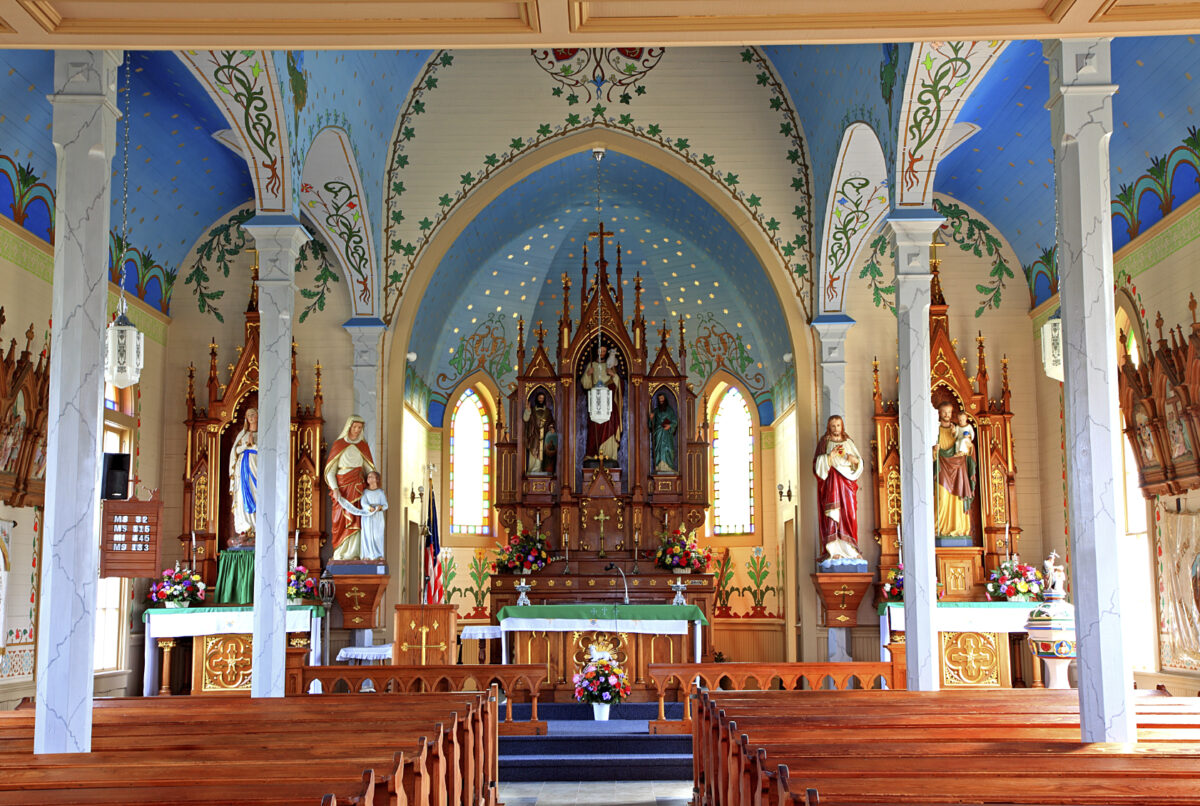
* The Empty Pews: In the newly merged Zhangjiakou, the spiritual heritage of Xiwanzi and Xuanhua is being erased. The faithful feel betrayed; they have lost trust in the retired bishops who acquiesced to the merger. Today, the newly built cathedral hosted by the two retired bishops is nearly empty. For daily Mass, the participants are only 20 to 30 to attend their Mass. For Sunday Mass, 40 to 50.
* The Exile of the Saintly: In Xinxiang, the beloved Bishop Zhang Weizhu has been marginalized. His “crime” was the whole faithful in his diocese deem him as a saint. In a tragic inversion of ecclesiastical order, the very priest who had been excommunicated by Bishop Zhang Weizhu for his moral and disciplinary failings is now being promoted as a new bishop of Xinxiang diocese.
IV. The Existential Threat: The Risk of “Anglicanization”
If the Underground Church is allowed to vanish, replaced by a hierarchy prioritized by political compliance over moral sanctity, the Church in China faces the peril of “Anglicanization.” We risk creating a nationalized entity that retains the outward symbols of Catholicism but lacks the inward essence of Petrine Primacy. A church managed by “careerists” who fear the State more than God will eventually cease to be the Catholic Church.
V. Conclusion: The Silence that Speaks
The pews are empty not because the people have lost their faith, but because they are protecting it. They are waiting for shepherds who smell of the sheep—and of the prison—not of diplomatic compromise. As a historian, I record these facts so that the Successor of Peter may hear the silence of the Zhangjiakou Cathedral. It is a silence that speaks louder than any official report.
The implementation of the Provisional Agreement must not become a mechanism for “bad money to drive out good.” We implore the Holy See to return to the strict rigor of Canon 378. Do not replace saintly confessors with opportunistic “men of the world.”
In the spirit of the Chinese Martyrs, we remind the Successor of Peter: The Church is built on the blood of those who said “No” to the world so they could say “Yes” to Christ. Let this be the standard for every bishop appointed in our land.